
On New Year’s Eve, African Americans from around the country gathered in Black churches for “Watch Night” Services, the tradition of reenacting the watch of enslaved Africans December 31, 1862, as our ancestors eagerly awaited the day that the Emancipation Proclamation would officially become law; the moment they could proclaim “free at last, free at last, thank God Almighty, we’re free at last!” As I noted in a previous article, in fact hundreds of thousands of enslaved Africans had already liberated themselves by abandoning plantations and fleeing to the camps of the Union Army; a movement that did not go unnoticed by President Lincoln. Nonetheless, the jubilation was justified because the Proclamation officially sanctioned the acts of self-liberation and “freed” those who had remained on the plantation. But, in many respects “emancipation” would prove to be a “cruel hoax” that ultimately left millions of formerly enslaved Africans in a state of political and economic dependency and peonage.
First, it is important to clarify Lincoln’s motives for the Proclamation and its limits. While there is little doubt that Lincoln found slavery morally repugnant, ending slavery was not his primary motive for waging a war against the Confederacy. Plain and simple, Lincoln’s ultimate goal was to preserve the cherished American Union. Frankly, the war did not initially go well as one incompetent Union General after another was thoroughly outmaneuvered by the superior generalship of an undermanned Confederate Army, particularly on the eastern front. As the North lost battle after battle, the war was increasing unpopular among the masses of poor and working Whites who were the conscripts for the Union cause. However, the war effort had some modest successes on the western front in places like Tennessee, Mississippi and Louisiana. It was in these areas that enslaved Africans, sensing the possibility of striking a blow for their own freedom, bolted from the plantations in droves. Economically, this deprived the South of the work force to feed its armies and the cash crops to finance the war; militarily it created a huge pool of potential Union soldiers.
Finally heeding the urgent appeals of some of his most successful Generals, Lincoln shrewdly came to understand the economic and military benefits of “emancipating” the enslaved Africans – with reservations. Lincoln did not want to antagonize the slaveholding states that were not in “active belligerency” against the Union, e.g., New York, Delaware, Maryland, Kentucky, Missouri. Therefore, contrary to popular belief, the Emancipation Proclamation did not free all enslaved Africans. It only “freed” enslaved Africans in states that were at war with the Union. By some estimates that left 700,000 to 1 million enslaved Africans in bondage – where they would remain until the passage of the 13th Amendment which completed what the Proclamation had left undone – abolish slavery for all forever!
The real question is what was the nature of this “Emancipation?” While a lot of attention is often focused on the glory years of Black political empowerment during Reconstruction, the harsh reality is that the vast majority of formerly enslaved Africans were forced into a state of quasi-slavery. There were reformers who sought to implement programs like the Freedman’s Bureau, to orient the formerly enslaved Africans for freedom, but these programs were half-hearted and achieved limited success. Without the promised “forty acres and a mule,” property or education, many of the newly freed slaves landed back on the very plantations they had fled to become sharecroppers, tenant farmers and agricultural laborers. It was a cruel emancipation that delivered you back into a state of dependency into the hands of your former slave master. For the countless thousands of formerly enslaved Africans who were left to fend for themselves, wandering from place to place like paupers, numerous Southern counties adopted vagrancy laws which provided for the arrest of crowds of people who were not gainfully employed. Once imprisoned, unscrupulous wardens would hire out inmates to local landowners and businesses, utilizing the infamous convict-lease system.
After the passage of the 13th, 14th and 15th Amendments and Reconstruction statutes pushed by radical Republicans like Thaddeus Stephens and Charles Sumner, formerly enslaved Africans did indeed enjoy the greatest period of electoral political power at any time until the present. Blacks served with distinction as Senators, Congressmen, State Legislators and county officials. Most historians agree these Blacks generally adopted progressive social legislation at the state and local level, performing remarkably well for a people largely unfamiliar with “democracy.” The problem was that Black political power was dependent on the goodwill and protection of Republicans who saw it in their political and economic interest to disempower the former Confederates in the South while empowering newly freed Blacks. By definition “Reconstruction” meant setting conditions for the former Confederates to reenter the Union as citizens. The most despised and crippling of these conditions was taking away the right to vote until former Confederates pledged allegiance to the federal government; a condition which bred fierce hostility and resistance among the defeated forces of Dixie.
Throughout the South the newly freed Africans bore the brunt of this hostility and resistance. The former Confederates created organizations like the Ku Klux Klan, White Brotherhood and Knights of the White Camelia with the overt intent of intimidating, terrorizing and brutalizing Blacks and driving them from power. Despite the stationing of Union troops to protect the right of Blacks to vote, the reign of terror by white supremacist organizations coupled with the economic servitude/dependency of formerly enslaved Africans, was increasingly effective in frightening Blacks away from the ballot box. By 1876 a sufficient number of Whites had regained the franchise in the South to force a stalemate in the presidential election that year. Black voter power was no longer sufficient to enable Republicans to maintain their grip on the presidency. Faced with this new reality, the Republicans cut a deal. In the infamous “Compromise of 1876” they agreed to withdraw all federal troops from the South and leave the “problem of the Negro” to be resolved by the states. In exchange, the Democrats agreed to allow Rutherford B. Hayes, the Republican, to become President. The emancipated Blacks were betrayed by their benefactors.
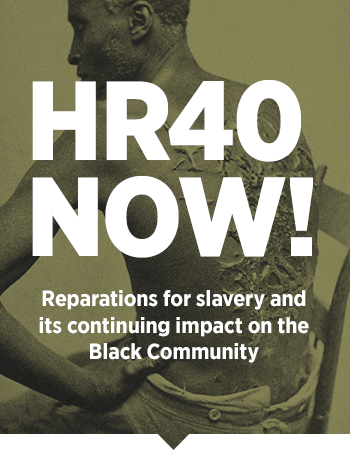
Black political power had been dependent power, and with the withdrawal of support by the Republicans that power would wither under the vicious onslaught of white supremacist forces, determined to put the Negro back in his rightful place as a quasi-slave. “Black Reconstruction” was brutally terminated, and by 1896, the year of the Plessy versus Ferguson decision, Blacks had largely been disenfranchised, and a rigid system of separation of the races was imposed. Worse still, Blacks would be confined to the South while millions of European immigrants would come to this country to seek “opportunities” for a better life as the industrial revolution intensified in the Northeast and Midwest. Though these new immigrants were ruthlessly exploited by the “Robber Barons” and “Captains of Industry,” it was still better to work for a wage in the factories, mines, mills and foundries in the North than to be a wageless worker under a system of peonage in the South, with no meaningful prospects for change in one’s condition. Northern Euro-ethnic wage earners could pass on their meager savings to the next generation to begin an inter-generational wealth-building process. The formerly enslaved Africans had no such prospect – an intergenerational deficit that Africans in America suffer from to this day. Such was the Cruel Hoax of Emancipation!
Dr. Ron Daniels is President of the Institute of the Black World 21st Century and Distinguished Lecturer at York College City University of New York. His articles and essays also appear on the IBW website www.ibw21.org and www.northstarnews.com . To send a message, arrange media interviews or speaking engagements, Dr. Daniels can be reached via email at info@ibw21.org
# # #