One of the greatest triumphs of the Black Power, Black Nationalist and Black Consciousness movements of the 60’s and 70’s was the widespread embrace of the Nguzo Saba, The Seven Principles of the Black Value System, and Kwanzaa, the African American holiday created by Dr. Maulana Karenga. As an authentic genius and master teacher, a fundamental tenet of Dr. Karenga’s thought is that “the key crisis in Black life is the cultural crisis.” He has consistently argued that an appreciation of one’s own history and culture is vital to developing a healthy self-concept and positive view of the racial/ethnic group to which you belong. Hence, Dr. Karenga “returned to the source,” Africa to construct a value system for the sons and daughters of formerly enslaved Africans in America. He systematically researched/examined the worldview and traditional way of life which has sustained African people for thousands of years. After exhaustive study, Dr. Karenga developed Kawaida, “the doctrine of tradition and reason,” as a theoretical framework and practical guide for the liberation and restoration of an oppressed people.
The Nguzo Saba contains the core concepts and values of Kawaida and the foundation for Kwanzaa. In a recent article, First Call for State of the Black World Conference III, I suggested that a spiritual and cultural revival is essential to combat and overcome the devastating State of Emergency afflicting the “dark ghettos” in Black America. As we begin the celebration of Kwanzaa, it might be useful to restate the Nguzo Saba and discuss its relevance to healing our families and communities in a time of crisis. So, I offer these reflections.
The first Principle in the Nguzo Saba is Umoja/Unity. That Africans in America should be unified or act in concert to confront the State of Emergency should be self evident. However, achieving Black unity can be challenging and illusive. In the name of pursuing the interests of Black people, what we have in the Black community is a myriad of leaders and organizations that all too often compete rather than cooperate with each other. Moreover, various leaders and organizations have different ideologies and strategies for achieving full freedom/liberation. There is also a “class divide” between the more affluent sisters and brothers who have benefited from the “movement” and moved up in the world and the dispossessed left behind in abandoned and devastated “dark ghettos,” the “hood.” Overcoming disunity requires a conscious effort to create “united front” structures which bring people together despite their differences in philosophy and approach. Dr. Karenga has advocated “operational unity” as a concept to enable leaders and organizations with differing philosophies and approaches to work together. Operational unity means focusing on issues and areas where there is agreement among organizations and leaders rather than disagreement. Dr. Karenga calls this “unity without uniformity.” With so many problems/issues affecting the Black community, the goal of operational unity is to have leaders and organizations collaborate/act collectively around specific issues, projects and initiatives they agree on.
Unity in the Black community also requires bridging the class divide. Brothers and sisters who have seized on a pathway to the middle and upper class paved by the blood and sacrifice of heroes and sheroes of the Black freedom struggle have an obligation to spiritually and/or physically return to “Tobacco Road,” the urban inner-city neighborhoods of this country, to give back, to reinvest their time, talent and resources to reconstruct/revive the “dark ghettos” from which they escaped.
The second Principle is Kujichagulia/Self-Determination. There has been much talk about a “post-racial society” in the aftermath of the election of Barack Obama as America’s first African American president. And, there have always been some within the race who wanted to escape the “burden” of their Blackness. The State of Emergency in Black America clearly suggests that “race still matters” as a determinant of one’s life chances in this country. Dr. Karenga has said that to chart a course toward full freedom, a theory/ideology of liberation must provide an “identity, purpose and direction.” I believe that if we are to permanently rise above the crises plaguing our families and communities, we must name and claim our identity, proudly embrace ourselves and be resolutely committed to being “of the race and for the race.” As descendants from the African motherland, “we are an African people.” And, part of our mission in life should be to unapologetically work for the advancement of people of African descent in the U.S. and the Pan African world. This does not mean disrespecting, disregarding or disdaining other racial/ethnic groups; it simply means “charity begins at home and spreads abroad,” and “love thy neighbor as thyself.” We cannot, must not abandon the race, especially our sisters and brothers in the “hood,” in an ill conceived effort to become absorbed in a “colorblind” or “post racial society.” We have a right to define who we are and determine our own destiny as people!
The third Principle is Ujima/Collective Work and Responsibility. As noted earlier, the Doctrine of Kawaida as conceived by Dr. Karenga is grounded in the traditional worldview and way of life of African people. As such it emphasizes “we, us and our” in terms of the values that are important to building and sustaining wholesome families and communities. This is diametrically opposed to the “me, myself and I” values of “individualism” and “competition” stressed as central to the “cherished” American/western way of life. The concept of the “collective” is frowned upon in America as “socialist” or communist.” And yet, the idea of extended families working together for a common purpose within communities with a sense of mutual obligation and responsibility is deeply ingrained in African societies – and our own experience as Africans in America, particularly in the South. We certainly will not permit class or status to divide us if we see ourselves as one people committed to promoting the common good of the race. This is a clear example of the need to retain the values/principles of our forebears as opposed to adopting a value orientation which has proven to be destructive to Black families and communities.
The fourth Principle is Ujamaa/Cooperative Economics. This principle is closely linked to Ujima in that it encourages people of African descent to share resources and engage in joint efforts to build and sustain an economic foundation for our families and communities. Cooperatives, credit unions, investment clubs and community development corporations are examples of economic structures based on pooling and sharing resources for the common good. Ujamaa does not preclude for-profit corporations or individual entrepreneurship. But, the value/principle of Ujamaa dictates that entrepreneurs and businesses explore ways of collaborating/cooperating, exchanging ideas and pooling resources where appropriate to enhance the collective economic empowerment of the Black community. This is what Dr. Claud Anderson has promoted through the concept of Powernomics and George Fraser through Power Networking. In the spirit of Booker T. Washington, Marcus Garvey, W.E.B. Du Bois and the Honorable Elijah Muhammad, it is imperative that people of African descent persistently work to build an economic infrastructure to undergird our social and political institutions.
The fifth Principle is Nia/Purpose. When we survey the incredible fratricide/carnage occurring in Black communities, largely committed by young Black males, one has the feeling that it may be because many of our young people lack a sense of purpose and meaning in their lives. And, this may be related to a lack of collective purpose in the Black community as a whole. Gone are the days of the civil rights/human rights and Black Power movements when there was a pervasive spirit of purpose in the air. There was a dynamic movement and a feeling that Black people were on the move! In the face of a daunting State of Emergency, we urgently need to restore a sense of purpose in Black America. And, that purpose should be a commitment to reclaim and rebuild our communities, a fervent determination that America’s desolate dark ghettos will become new communities that are bright beacons of hope and possibility. The collective conviction/purpose and the struggle required to rebuild our communities will be contagious; it will capture the hearts and minds of our youth/young people by restoring a sense of mission to their lives as part of a people fighting to liberate themselves from an oppressive value system and society.
The Sixth Principle is Kuumba/Creativity. People of African descent gave the world its first multi-genius in the person of Imhotep, the Egyptian physician, architect and engineer who mastered the science of building in stone that led to the erection of the pyramids as one of the greatest wonders of the world! One might say that creativity is in our DNA. Africans from the Caribbean took old barrels and transformed them into “steel drums” that produce amazing music. Those of us who came up on the “rough side of the mountain” in America (most of us) bear witness to the fact that our mothers and fathers were masters of “making something out of nothing.” They had to in order to survive. Overcoming the State of Emergency to rebuild our families and communities is a formidable undertaking. It will not be easy, but we should act with the absolute confidence that we possess the creativity, the knowledge, skill and will to meet the challenge.
The Seventh and final Principle is Imani/Faith. Given the obstacles our forebears faced, they had to have an abiding faith that survival was possible, that beyond the brutality, hardships, suffering and sacrifice of the moment, “joy would come in the morning,” that someday, a generation that sprang from their loins – sons, daughters, grandchildren, great grandchildren, great, great grandchildren … would be able to proclaim “free at last.” For millions it was the belief that “we’ve come this far by faith, leaning on the Lord.” For others it was a spiritual force deep down inside that could be tapped to carry forth for another day and another day … the faith that a better day was coming for the sons and daughters of Africa in America. In this current crisis, we too must have faith, a belief that enables us to scale heights, not normally possible, because we believe and act on our beliefs. Similar to the Principle of Kuumba/Creativity, we must have faith that there are no odds too great for a people to overcome if we act with Umoja/Unity, Kujichagulia/Self-Determination, Ujima/Collective Work and Responsibility, Ujamaa/Cooperative Economics, Nia/Purpose, Kuumba/Creativity, and Imani/Faith. “Deep in my heart, I do believe, we shall overcome some day!”
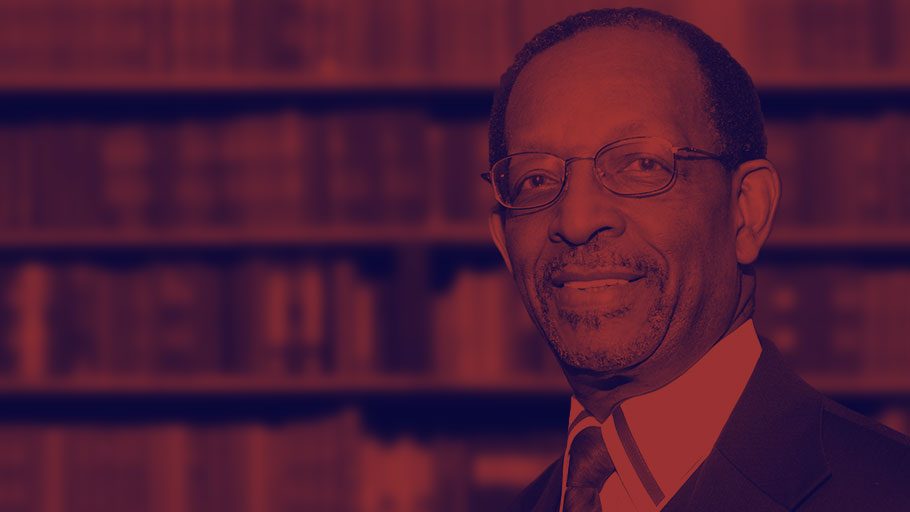
Dr. Ron Daniels is President of the Institute of the Black World 21st Century and Distinguished Lecturer at York College City University of New York. His articles and essays also appear on the IBW website www.ibw21.org and www.northstarnews.com . To send a message, arrange media interviews or speaking engagements, Dr. Daniels can be reached via email at info@ibw21.org.