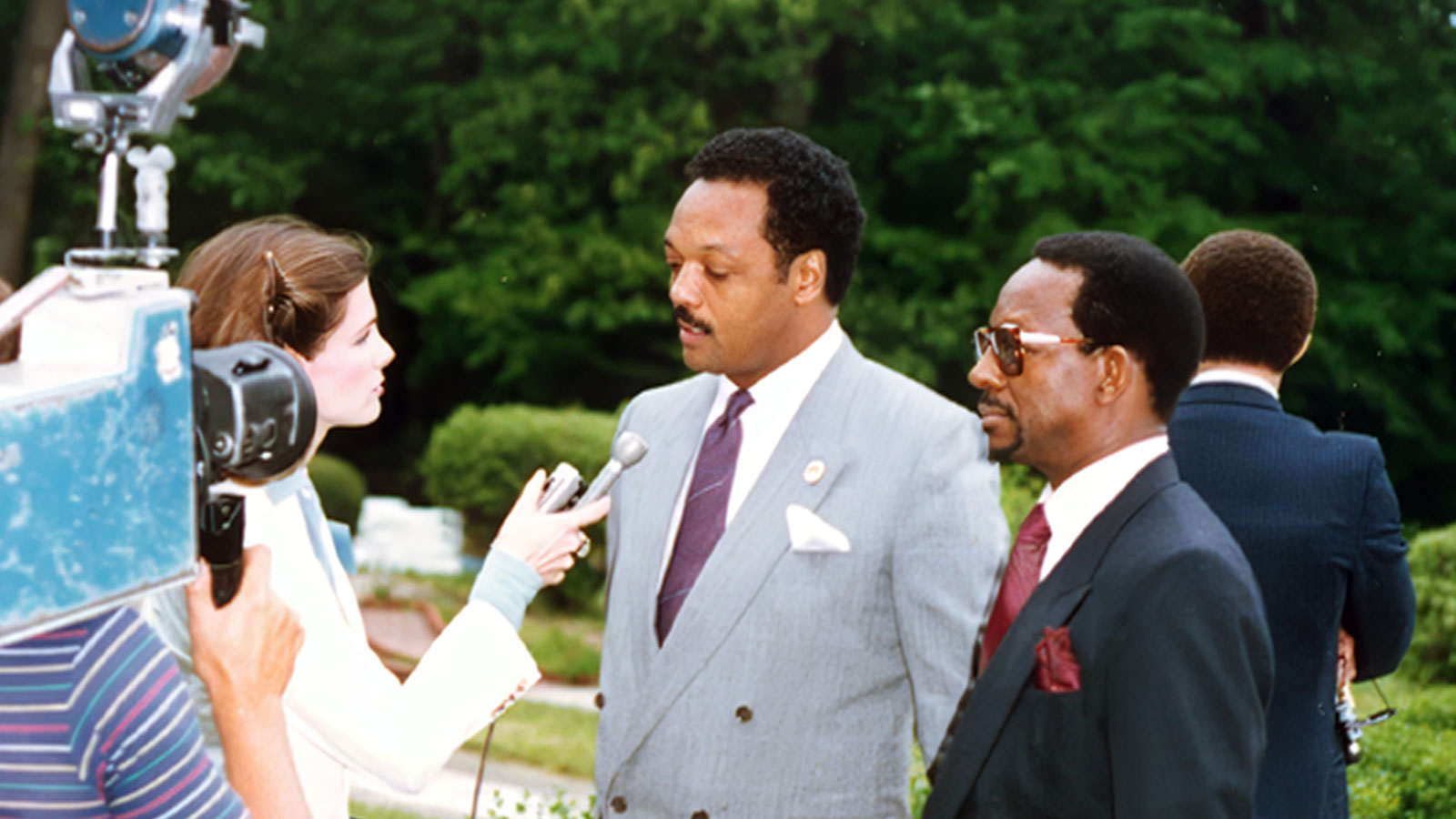
A tribute and testimonial by Dr. Ron Daniels, reflecting on the life, leadership, and legacy of Rev. Jesse L. Jackson following his March 2026 homegoing service.
“Rise, Jesse, Rise”
My wife and partner, Mary France-Daniels and I had the honor to attend the Private Homegoing Service for the Rev. Jesse Louis Jackson, a beloved friend, brother and comrade whom I have called an authentic genius and one of the greatest leaders in the history of the United States of America and the World. Having immediately sent a private note of condolence to Mrs. Jackqueline Jackson, the wife, soulmate and indispensable advisor to Rev. Jackson and the rock of the Jackson family, I was having trouble penning what I felt would be a fitting tribute to this larger-than-life human being. After experiencing such an amazing, spirit-filled, informational, educational and inspirational homegoing celebration, I now realize that my hesitancy was because I needed the immersion of this awesome experience to compose a tribute that would come from the bosom of my soul.
I cannot recall when and where we first met. It certainly was before the 1972 historic Gary National Black Political Convention, but the exact moment eludes my memory. What I do know is that Rev. Jackson would occasionally journey to Youngstown, OH., the small steel town that became the base for Freedom, Inc., a formidable Black Consciousness, Nationalist, Pan Africanist and Internationalist organization which I founded when Black Power exploded onto the national stage. As was his habit, Rev. Jackson would often tap a local pastor or activist to assist with his appearance in a locale. When he came to Youngstown, it was Ron Daniels.
So, while I am not aware of the exact moment or circumstances of our collaboration, I do recall putting heads together with Rev. Jackson and other leaders when the National Black Political Assembly, which was the continuations structure for the Gary National Black Political Convention, met in Greensboro, NC. to grapple with how to craft language that would calm the controversy over the adoption of a resolution at the Convention that called for the establishment of a Palestinian State.
Download the full booklet (PDF) or continue reading below.
As you might imagine this was the most controversial resolution forwarded by the Convention and there was furious push back emanating from sectors of the Jewish community. The compromise was an amendment to the resolutions which honored Israel’s right to exist and called for a “two state solution” which would create a homeland for the Palestinians. Over the years, the framework adopted in the compromise resolution became the centerpiece of U.S. policy for resolving the Israeli Palestinian conflict. But in the 70’s even the compromise resolution was adamantly rejected by rightwing forces within the Jewish community and their allies.
Opposition notwithstanding, Rev. Jackson was steadfast in his conviction that the Palestinians must have a homeland. That conviction, which he never abandoned, was courageously demonstrated when he appointed Jim Zogby, President of the Arab American Institute, as a Co-Chairman of his 1984 and 1988 campaigns. He did this at a time when Arab Americans were marginalized in the body-politic of this country and Islamophobia was rampant.
Suffice it to say that the meaningful experiences in my relationship with Rev. Jackson are far too numerous to catalogue. It would take a book. Hence, for the purpose of this tribute and testimonial, I will focus on Rev. Jackson’s electrifying 1984 and 1988 campaigns for President of the United States and beyond.
Few people have the opportunity to serve at the highest levels of a presidential campaign. Rev. Jackson afforded me that opportunity by selecting me to serve as Southern Regional Coordinator and Deputy Campaign Manager for his milestone 1988 presidential campaign. I was honored to receive the torch from Dr. Ronald Walters, Black America’s leading Political Scientist, who served as Senior Political Advisor and confidante for Rev. Jackson’s groundbreaking 1984 campaign.
“…it was my turn to try to keep up with Rev. Jesse Louis Jackson, this indefatigable visionary…”
Dr. Walters was a beloved friend and co-partner in numerous political endeavors to advance the interests and aspirations of Black people in the U.S. and the Pan-African World. It was Ron Walters who suggested to Rev. Jackson that I play a key role in the 1988 campaign, after joking that his wife and partner Pat Walters declared that Rev. Jackson was not going to take her “Ronnie” though another bruising, exhausting campaign. So, Dr. Walters said it was my turn to try to keep up with Rev. Jesse Louis Jackson, this indefatigable visionary, who was blessed with boundless energy the likes of which few mortals possessed.
Yes, Rev. Jackson’s legendary energy was integral to the chemistry of his commitment to fulfil the “Micah Mandate” of pursuing and achieving justice for all of God’s children with a relentless and loving focus on the marginalized, rejected, oppressed, left-out and locked-out, “red, yellow, black, brown and white, all precious in God’s site.” Energy was not the only asset of this generational leader. Rev. Jesse L. Jackson was an authentic genius!
Having worked with and witnessed him in action, I assumed my initial assignment as Executive Director of the National Rainbow Coalition and subsequently Deputy Campaign Manager confident of my skills as a scholar activist, institution-builder, community organizer, strategist and communicator. Though I held Rev. Jackson in the highest esteem, I was not mesmerized by him. I did not take this historic assignment just to hang-out with and be at the side of this great man.
In fact, when he offered me the position, I requested that he come to Youngstown for a testimonial that was being held on my behalf to meet with some of my key allies and political associates so that I would accept the position with their approval. Rev. Jackson readily agreed. Dr. James Turner, Haki Madhubuti and Dr. Conrad Worrill were among the circle of allies who met with Rev. Jackson for a dialogue about the campaign, after which they pronounced that they were onboard. With their blessing I accepted Rev. Jackson’s offer and embarked on an experience that would be the honor of my life’s work.
“This ability to analyze seemingly complex problems… and translate them into language ordinary people could understand…”
Rev. Jackson is reported to have once said: “I’m a tree-shaker, not a jelly maker.” Well, I viewed my assignment as working to make the “jam;” to assist in developing the principles, processes, procedures and administrative infrastructure to advance and actualize Rev. Jackson’s vision of a Rainbow Coalition to transform the United States of America; a vision and task not too tall for this towering genius.
And, yes, he was an authentic genius. I would often call him that during our deliberations on his approach to strategy, tactics, events and policy. After yet another brilliant/ingenious formulation on either of these, I would say, “You’re an authentic genius.” He would just smile and brush it off.
The proof is in the pudding. Rev. Jesse L. Jackson was not a trained psychologist or sociologist, but his profound grasp of the depth of the wound to the psych and self-esteem of Africans in America, Black people from enslavement and its legacies of Jim Crow segregation was demonstrated by the simple but powerfully uplifting and healing phrase: “I am somebody.” It was an uplifting phrase and call and response ritual that was recited thousands upon thousands of times as Rev. Jackson spoke at schools, rallies and events all across this nation. Its impact was undeniable as evidenced by the world hearing testimonies from a multiplicity of individuals about how that phrase, that call and response ritual had positively impacted their lives during the Homegoing Celebrations in cities across the country.
Rev. Jesse L. Jackson was the first leader I ever heard calculate the cost of the mass incarceration of Black people in prisons and jails, the criminalization of a race largely due to oppression, exploitation and the lack of social and economic resources and opportunities compared to the cost of investment in education, jobs, counseling, healthcare and economic development. Time and time again he would drive home the point that investment in jobs is far less expensive and more wholesome than investing in the prison/jail industrial complex. Hence, the challenge to choose jobs over jails: a simple, understandable proposition that became an informational and educational cornerstone of the criminal justice reform movement.
This ability to analyze seemingly complex socio-economic problems, crises or assessments of the human condition and translate them into language, phraseology, slogans, symbols and solutions ordinary people could understand was another dimension of the genius of this extraordinary man. In that regard, Rev. Jackson was the undisputed heavyweight champion of voter education and registration. He engaged and registered more Black and Rainbow voters than any human being or organization committed to using the ballot as a tool in the Black Freedom Struggle.
“…rocks just laying around… unless we pick them up and use them…”
He achieved this status by collecting voter registration and voter turn-out data for voting aged Blacks in virtually every state and used that data to teach all of us, but particularly those among us who were reluctant to vote or did not believe that voting could make a difference in terms of which candidate won or lost an election. Rev. Jackson used that data to demonstrate that Black voters matter!
State by state he would verbally illustrate and powerfully orate on how Black voters were the margin of victory or defeat for candidates for various offices including the House of Representations, Senate and President. It was simple. How many votes did a candidate win or lose by measured against the number of unregistered or non-voting Blacks. Then he would hammer home the point that a candidate that was opposed to Black interests and aspirations and the concerns of poor and working people won by the margin of our indifference, apathy and despair because we failed to use the power that we have in our hands, the ballot.
In this regard, nothing more illustrates the genius of Rev. Jesse L. Jackson in terms of communicating a lesson that captured the imagination of the people than his famous “Rocks Speech,” delivered at the Tindley Temple United Methodist Church in Philadelphia in 1984. Rev. Jackson used the Biblical story of the divinely anointed shepherd boy David slaying Goliath, the giant who was a terrifying, rampaging enemy of the Israelites. David slew the dread giant because he picked up a rock, placed it in a slingshot as God instructed and hurled it directly into the forehead of Goliath.
In his own inimitable and incomparable way, Rev. Jackson, compared the rocks to votes and made the point that they were just rocks just laying around with no effect unless we pick them up and use them as David had to remove a major barrier blocking Black progress. Before an adoring and receptive “class,” the master teacher got the point across that their time had come to pick up their rocks, their ballots and use them to elect candidates who would advance and protect the interests of Black people and other oppressed people. The genius of Rev. Jesse L. Jackson!
Envisioning and articulating the concept of a Rainbow Coalition comprised of marginalized Red, Yellow, Brown, Black and White marginalized people to resist and transform America’s racialized Capitalist system is undoubtedly one of the great ideas in this nation’s quest to achieve a more perfect union. I submit without fear of contradiction that the Rainbow Coalition offered the greatest opportunity for poor and working class and struggling middle class nationalities and constituencies to “unite and fight” America’s exploitative and oppressive system since the Populist Movement and revolt in the decade after the end of Reconstruction in the 19th Century.
It is a proposition that requires more space than I can commit to in this tribute, but suffice it to say this powerful, but far too little examined movement of White farmers and workers and Black farmers and workers in the South ultimately failed because the White leaders driving the movement succumbed to the entreaties of those at the commanding heights of capital and finance that they abandon the massive Black wing of the movement in favor of their White kith and kin! In short, racism was employed to drive a wedge between Black and White utilizing the psychological and material benefits of “Jim Crow” segregation to ensure that Black and White would never, ever again unite and fight the Capitalist class!
The brilliance and functional beauty of the Rainbow Coalition as envisioned and led by Rev. Jesse Louis Jackson was/is that it was organized from the inside-out, rooted in the heroic cross-generational, civil rights, human rights, justice-centered, prophetic Black Freedom Struggle that has always sought to liberate the sons and daughters of Africa in America and all oppressed people. Rev. Jesse L. Jackson was not about to abandon Black people on the basis of racism. On the contrary, the ingenious formulation of the concept of “Economic Common Ground” was the cornerstone for a respectful, non-sectarian Black-led, multi-racial formation committed to creating a new America!
“…a preacher from the civil rights movement… teaching about the commonality of the struggles and aspirations of Blacks and Whites… imploring them to ‘unite and fight’ on the basis of economic common ground.”
I had the honor of being an eyewitness to history as Rev. Jackson brilliantly operationalized this groundbreaking vision and concept. At a time when farmers in Iowa and the grain belt of America were being ravished by farm foreclosures due to unfair competition with giant agrobusinesses, Rev. Jackson, an audacious Black man, took his crusade for a new America to fight for the end or a moratorium on foreclosures on small and medium sized family farms owned by White Americans. He would call for a rally to protest this injustice on the site of a farm threatened by foreclosure, and hundreds of beleaguered farmers and neighbors would show up to witness and support. If there were say 1,500 who showed up, in most instances fewer than a 100 would be Black.
Here then were hundreds of White folks pinning their hopes on and following the lead of a visionary, righteous Black man, a preacher from the civil rights movement dedicated to overcoming white racism and white supremacy, teaching about the commonality of the struggles and aspirations of Blacks and Whites and imploring them to “unite and fight” on the basis of “economic common ground!” Rev. Jackson persuaded some financial institutions and legal enforcers to renegotiate the mortgages and loans of these distressed farmers. In other instances, the foreclosure orders were suspended and in some cases the profit-driven institutions refused to have mercy.
Whatever the outcome, thousands upon thousands of White farmers and their families witnessed a Black man, the Rev. Jesse Louis Jackson, pleading their case before the nation. And they were willing to follow his leadership in advocating for a resolution of their grievances and issues with a deeper understanding of the vital concerns of others who were similarly situated, including Black folks. They understood economic common ground.
Rev. Jackson has always viewed educating and motivating young people a vital constituency among “we the people.” His charge and challenge to young people was to register and vote and become involved in various forms of civic engagement. In that regard I was an eyewitness to one of the most memorable moments in the 1988 Campaign.
Rev. Jackson traveled to Seattle Washington where some 20,000, mostly White students turned out to listen to and be inspired by a son of the Civil Rights Movement charismatically articulating a vision for “bold leadership and a new direction” for America. He challenged them to seize control of their destinies by getting engaged, and they did by the thousands. Rev. Jesse Louis Jackson demonstrated time and time again that despite racism being ingrained in the systems of this society, significant numbers of White folks will follow righteous Black leadership!
The 80’s was a period of globalization and consolidation of corporations and financial institutions who expanded beyond America’s shores to become multi-national conglomerates; an era that Rev. Jackson characterized in his inimitable way as “merging, purging and submerging;” phraseology that ordinary people understood to mean ignoring, neglecting or ravishing their dreams for a better life. An insidious and destructive dimension of this era was plant-closings in the “rust belt” in the northeast and mid-west as corporations migrated to the south, southwest and Mexican border to exploit and dramatically increase profitability in the absence of labor unions.
“…staying in the homes of workers, breaking bread at their kitchen tables… a mode of human-centered relationship-building America had never seen before.”
Workers throughout the rust belt were rising up to block these injurious plant closings and demanding that their voices be heard. It was not the first time in the history of this nation that workers rose up to demand justice from the “captains of industry.” However, never before in the history of this country had workers found a major candidate for President of the United States, a Black man, who was willing and eager to join them in demonstrations and picket lines at the plant gate. That man was Rev. Jesse Louis Jackson, who by virtue of his unconventional presence, commanded the attention of the mainstream media that shed light on the plight of these workers before the nation and the world!
And Rev. Jackson did more than just being on the frontlines of protests at plant gates. He went further by actually staying in the homes of workers, breaking bread with their families around their kitchen tables and sleeping in their beds in their guestrooms. America had never, ever seen anything like this mode of human-centered relationship-building, this kind of “campaigning,” until that brilliant Black man burst onto the stage, the Rev. Jesse L. Jackson! Mainstream media covered these unorthodox “campaign” visits, thereby exposing the nation to the plight of ordinary working people in America!
I know, because I had the privilege to be with him on some of these moving occasions, including one he often referred to in showcasing the impact of his Economic Common Ground message. Rev. Jackson shared the experience of marching through the streets of Cudahy Wisconsin with workers concerned about the prospect of a factory closing. He describes seeing approving residents of the town admiringly waving Confederate Flags. Rev. Jackson said, “I saw the flags, waved back and kept on stepping.” The reception was so powerful that one of the workers invited him back to spend an overnight visit to further discuss how to amplify the protest. Rev. Jackson accepted. I was with him on that visit. National news outlets covered it. The objective of the visit was achieved! Rev. Jesse L. Jackson was an incomparable strategist!
The genius did not stop there. One of the most amazing highlights of the 1988 Campaign, and there were many, was an orchestrated exchange of visits by Marion Berry, Mayor of Washington, DC (what was then truly “Chocolate City”) and Jim Hightower, Commissioner of Agriculture for the State of Texas. Rev. Jackson arranged this exchange of visits to illustrate the commonality of issues, interests and aspirations of Black folks locked in the heart of America’s “dark ghettos” and White poor and working-class people subsisting in rural America like regions of Texas. Once again, the mainstream media was captivated by the rarity of such an exchange.
Jim Hightower accompanied Rev. Jackson to Washington, DC to visit residents in marginalized neighborhoods where the residents had never met and engaged in dialogue with the likes of Jim Hightower. Then Hightower returned the favor by hosting a dialogue with rural Texans with Mayor Marion Barry with Rev. Jackson by his side. The media ate it up and showcased this living lesson in Economic Common Ground as the public policy framework of the extraordinary presidential campaign of Rev. Jesse Louis Jackson!
And it did not stop there. Rev. Jesse L. Jackson had no peer as a proponent of innovative and progressive, people-oriented public policy. Not all of the policy proposals he unveiled were his, but he had the capacity to listen to the raw stuff of innovative ideas gestated by policy wonks and experts, some of whom were supporters or on the staff, and translate them into understandable policy solutions so clear that the “goats get it” as famed radio talk show host Joe Madison used to say.
Rev. Jackson advanced the radical and rational proposition that plants that have become integral to the life of a city should not be permitted to shut down or move without first providing notice within a specified time and with the obligation of offering jobs training for the impacted employees. The adoption of this proposal would have mitigated some of the anger and grievance that opportunist candidates have been able to exploit right up to the present.
Rev. Jackson was the first political leader I ever heard to advance the radical and rational idea of utilizing public pension funds to invest in repairing America’s dangerously ancient and crumbling infrastructure of bridges, highways and railroads; a proposal that is obviously still relevant today.
Other radical but rational proposals included same day, onsite voter registration, instant run off voting, which is currently called ranked choice voting which has been adopted in New York City and other locales around the nation; paid sick leave, single payer health insurance and a full-employment economy with a living wage, all proposals which have inched toward realization.
“…bold policy prescriptions and captivating messaging yielded an awesome harvest of votes…”
There are many, many other proposals, but without a doubt in the political arena, Rev. Jackson’s signature achievement is compelling the Democratic Party to change the primary delegation selection process from a winner take all to a proportional system which paved the way for Barack Hussein Obama to become the first Black President of the United States of America!
The brilliant formula of a powerful, understandable overarching aspirational and realizable theme, unconventional people-based campaign strategies, bold and achievable policy prescriptions and captivating messaging yielded an awesome harvest of votes, including rocks previously just lying on the ground, producing stunning victories on Super-Tuesday in the South and the Michigan Caucus in the mid-west as the Jackson Action Rainbow Express rolled triumphantly into Atlanta for the Democratic National Convention with the Rev. Jesse Louis Jackson, an authentic genius in the driver’s seat! I am extremely proud of the latter as I coined the term Jackson Action Rainbow Express and was deeply involved in the incredible work that produced key victories on Super-Tuesday in my capacity as Southern Regional Coordinator.
With extremely limited resources except for the Rev. Jesse L. Jackson brand, I was pulled from my post as Executive Director of the Rainbow Coalition- where I was constantly at Rev. Jackson’s side and dispatched to Atlanta along with Jesse Jackson, Jr. and Lewis Carter. Our charge was to set up the Southern Regional Office and devise a strategy for mobilizing turn-out in the Black voter-rich Super Tuesday States.
With virtually no resources, Rev. Jackson gave me one directive: “Go meet Joe Beasley.” I followed the directive and reached out to the incredibly well respected and connected civil rights/human rights advocate and PUSH ally Joe Beasely –who immediately went to work using his network of relationships to make arrangements for our team. For the first two weeks or so, we literally stayed in guest rooms in the funeral home of a friend of Joe, after which he intervened with the manager of the apartment building where he lived to secure a comfortable two-bedroom unit with a pull-out couch to accommodate our three-person team.
Lew Carter and I took the bedrooms and assigned Jesse Jr. to the pull-out couch in the living-room space. He initially balked vociferously but reluctantly agreed to yield to his elders. I have fond memories of that living room space where the three of us would have informative discussions and debates as Jesse Jr. was prepping for his first assignment as a surrogate to educate and inspire voters to make history by casting ballots for his father! What an incredible, once-in-a-lifetime experience!
Joe Beasely also identified a space for the Southern Regional Office just two blocks down the street from the apartment building where we lived. Our next task was to identify staff. Joe pointed us to Randall Magnum, Esq., the Chairman of the Jackson for President, ’88 Campaign for Georgia. Randall was a bright young attorney who coincidentally was a prized student of Mable Cook, my first cousin, who was one of Randall’s teachers in Griffin, GA, a small-town south of Atlanta. I recall her boasting about what an intelligent student Randall was. He proved to be a major asset to the regional campaign, not the least of which was by recommending a very talented Black woman, Letitia Daniels to take a leading role in structuring and staffing the regional operation. She in turn suggested another talented Black woman, Linda K. Brown, to join the team. It was a powerful, history-making team.
Once we assembled and assessed our human and material needs, it became clear that we were in need of a skilled person to provide various levels of training for volunteers committed to mobilizing voters in Georgia and the other Super Tuesday states under our jurisdiction. There was no one who was identified in Atlanta that had the requisite skills and experience for such an instrumental task. So, we were compelled to look elsewhere.
I racked my brain and recalled that there was a brother in Los Angeles who had a reputation for being one of the most skilled community organizers and trainers in Black America and the county. His name was Greg Akili. I found his contact information, reached out to him and discovered we had a mutual admiration for each other. Akili agreed without hesitation thereby adding to our team the person I consider the “baddest” organizer on the planet. We were ready to roll!
In addition to conducting trainings in Atlanta, Akili and I hit the road visiting several locales in Georgia, Alabama, Mississippi and Louisiana to train leaders and volunteers working with existing campaign committees and organizing and training campaign committees where none existed. We were also eager to build enthusiasm by instilling a belief that history was in the making through the Jesse Jackson for President Campaign; firing folks up with the belief and determination to win major victories on Super-Tuesday based on Black voters marching on ballot boxes with a mission, a purpose – propelling Rev. Jesse L. Jackson to victory by winning the Democratic Party nomination for President of the USA.
As we entered the final days of campaigning in the region, I conceived of an innovative way of galvanizing Black voters and our Rainbow allies to turn-out big time on election day – The Jackson Action Rainbow Express, a large recreational vehicle like the ones entertainers used to travel to from city to city, with large visible banners attached to both sides of the bus with the words: Jackson Action Rainbow Express.
The idea was to invite nationally known, highly visible supporters of Rev. Jackson to take shifts as surrogates speaking to rallies of supporters in cities and towns, large and small touching every Super Tuesday state. It was an electric idea, the kind of imaginative campaign tactic that was also calculated to attract local, state and regional news coverage that would reach massive numbers of potential voters.
The Jackson Action Rainbow Express was a spectacular success. We had two buses. One jubilant journey began in New Orleans at a press conference with Congressman Walter Fauntroy as the spokesperson and captain. Akili and I were on this bus as it rolled through several towns in Louisiana, Mississippi, Alabama and Georgia headed to Atlanta. Congressman Ronald V. Dellums and Congresswoman Maxine Waters were among the surrogate speakers on this bus.
“Rev. Jackson won close to 7 million votes… amassing over 1,200 delegates.”
The Second bus departed from Washington, DC after a press conference with Gary, Indiana Mayor Richard Gordon Hatcher at the helm. Jesse Jackson, Jr., Congressman John Conyers, Jr. and Dick Gregory served as surrogate speakers for this jubilant journey.
The Jackson Action Rainbow Express made its way through Virginia, North Carolina, South Carolina and Georgia enroute to Atlanta. Both decorated vehicles drew supportive waves and awe-struck expressions as they rolled down highways in the Super-Tuesday states as well as enthusiastic crowds at rallies at designated stops. The routing was timed for both buses to arrive in Atlanta for a highly publicized election eve rally.
We achieved the mission. The Jackson Action Rainbow Express buses arrived greeted by a rousing reception. The hall was on fire. No Zoom back then, but Rev. Jackson addressed the rally via an amplified telephone message in which he urged his supporters to turn out in record numbers to make history – and they did. Rev. Jesse L. Jackson and the Rainbow Coalition stunned the professional pundits and analysts by winning Georgia, Alabama, Mississippi, Louisiana and his home state of South Carolina. The road to the nomination seemed to be within grasp! It was on to a stunning victory in the midwestern state of Michigan and more modest successes in other mid-western and northern states, including New York which has a particular significance in that the Rainbow structure and votes amassed during the Jackson Campaign paved the way for David Dinkins to become the first African American Mayor of New York!
Though the 1988 Campaign fell short of winning the nomination, it was one of the most historic campaigns in the history of the USA. Rev. Jackson won close to 7 million votes and amassed over 1,200 delegates, all of which he was determined to use to definitively advance a bold policy agenda to address the needs of ordinary people, and leverage the power of his extraordinary campaign to extract concessions for the Democratic Party that would make it more inclusive and representative of racial and economic composition of the nation.
While the Party made a series of concessions, the most consequential agreement was to change the rules for delegation selection from a winner take all to a proportional system. It is this milestone reform which changed the course of history in this country by paving the way for Barack Hussein Obama to become the first Black President of the USA.
As he prepared for a triumphant journey to Atlanta to participate in the Democratic National Convention, the impact of the Jackson Action Rainbow Express on the milestone outcome of Super-Tuesday was not lost on Rev. Jackson. He elected to travel across country via a Jackson Action Rainbow Express II to demonstrate to his supporters and the nation that the campaign was historic and victorious in terms of uplifting the hope and aspirations of millions of Red, Yellow, Black, Brown and White Americans. Because of his 1984 and 1988 campaigns, the USA would never be the same. I drew the assignment of organizing the reception for the arrival of this remarkable preacher, teacher and political leader to Atlanta for a historic convention.
With the campaign concluded, I had actually put my Rainbow/Coalition, community organizer hat on so to speak with the idea of mobilizing thousands of Rev. Jackson’s supporters to assemble in Atlanta for a “Progressive Convention” during the same time as the Democratic National Convention. The goal was threefold: to demand that the Democratic Party adopt Rev. Jackson’s bold agenda for transformative change; to ensure he was respected by Party Officials in the face of the prospect of massive demonstrations outside the Convention; and finally, to ensure Rev. Jackson had a venue and national platform should he decide to bolt from the Democratic Party to form an independent political party.
When I was summoned by Ron Brown, the Jesse Campaign Convention Manager to discuss plans for Rev. Jackson’s arrival, he reviewed an outline of my plan for a Progressive Convention and said something to the effect: “this looks like a counter-convention.” To which I confessed. Brown’s decision was immediate. He vetoed the idea and directed me to organize a rally to welcome Rev. Jackson to the Democratic National Convention and to make it as big as possible. I had about three weeks to pull off this feat. And, what a spectacular feat it was. One of the great triumphs of my life’s work.
I consulted with our team about a venue. They immediately identified Piedmont Park as the place where folks were accustomed to gathering for major events. I visited the site to assess what would be required to stage a well-organized, massive welcome commensurate to the stature of one of the greatest leaders of our time. I concluded that I was over my head. We needed help. Someone who could devise a site plan and serve as the producer for an historic event.
Fortunately, during the campaign I met and befriended a brother who was a producer for the New Orleans Jazz Festival, Badi Murphy. I called him and outlined the task and the challenge of getting it done in short order. Despite the fact that he had other engagements, Badi dropped everything, jumped into his van and drove to Atlanta to get started. I will forever be indebted to and grateful to Nii Badi Murphy for the gracious decision to volunteer his expertise for such an auspicious occasion on short notice.
Badi was already acquainted with Piedmont Park so he quickly drafted a comprehensive site plan for the rally which included the location of portable toilets, portable water fountains (which I had not thought about), where the stage would be erected and the best space for the range of news outlets and their equipment. It was a masterful plan, perfectly suited for such a milestone occasion.
The next task was to design the Program, conscious that the nation and the world would be watching. With Joe Beasley’s support, we reached out to Rev. Cameron Alexander, Senior Pastor of the influential Antioch Baptist Church and revered ally of Rev. Jackson, to request that his awesome mass choir provide inspirational music. Rev. Jasper Williams, renowned Senior Pastor and recording artist from Salem Baptist Church was also enlisted to provide uplifting, joyous music. Badi used his contacts in Atlanta to secure an African drum and dance corps and rappers to provide positive spoken word. A powerful program was ready.
On the day of the rally, the local, national and international press began to arrive in droves, even as we were putting the finishing touches of the site. As Badi and I were doing a final walk around the site, I paused and looked at the area reserved for the press. I was in absolute awe of so many microwave antennas, sound trucks and press vehicles crowded into the space. I turned to Badi and said: “Badi, this is big!” We were ready to receive the man with the plan!
Our team was in communication via walkie talkies with Jackson Action Rainbow Express II as it approached the city and the park. We wanted to ensure that Rev. Jackson and party could be appropriately escorted to the stage. As the Express with its police escort came into view, the African drummers began to send polyrhythmic sounds into the air to fire-up the audience in preparation for the arrival of the extraordinary man who had given hope to millions of ordinary people.
When the Express pulled up to the park, I led a selected entourage of leaders, friends and allies to greet Rev. Jackson and escort him to the stage. When he climbed the stairs and approached the podium, some 15,000 supporters exploded with thunderous applause, joy and jubilation! Words are simply inadequate to express what a moving experience it was for Ron Daniels and our team to orchestrate such a powerful moment in history. Such was our love, respect and devotion to Rev. Jesse L. Jackson, an authentic genius.
The enormous impact of the Jackson Campaign on the 1988 Democratic National Convention is a matter of historic record. It was the honor of my life to have played an instrumental role in one of the most consequential political campaigns in the history of this imperfect union, forging a bond, friendship, comradeship with one of the greatest leaders of all-time; a bond that I am delighted to express, continued well beyond the game changing 1988 campaign.
Time and time again over the decades after the campaign Rev. Jackson would call upon me, as I am sure he would with other former staffers and allies, to brainstorm about an idea or occasionally just to kick-it. Rev. Jackson was a jovial person who was a joy to be around.
And time and time again, despite the unbelievable demands on his schedule, Rev. Jackson would show up when I called on him to support some aspect of my work as a scholar/activist and organizer pursuing my own journey for justice.
When I embarked on my independent campaign for President in 1992 with a mission of building a third force in American politics under the banner of Campaign for a New Tomorrow, Rev. Jackson showed up and appeared on my behalf at St. Mark AME Church in East Elmhurst, NY, where I am a member. He endorsed Cruising into History, an ambitious effort that mobilized more than 500 African Americans, Haitian Americans and friends of Haiti to travel to Haiti via cruise ship to commemorate the 200th Anniversary of the Haitian Revolution. Rev. Jackson was a tireless champion for Haiti and Haitian people and would frequently check in with me on issues related to Haiti right up to the time of his transition to the ancestor realm.
Today decriminalization or legalization of Marijuana is hardly controversial. But despite the fact that the “War on Drugs was a war on us,” the idea of legalization of drugs of any kind was not a popular idea in the Black community in the wake of the crack cocaine epidemic that ravished Black communities in the 70s and 80s. However, the tide began to turn as more and more evidence began to mount that the War on Drugs was the “New Jim Crow” as persuasively documented by Michelle Alexander. Nonetheless, legalizing drugs was still hard to swallow for many in the Black community
Ending the War on Drugs was a major priority for IBW via our Drug Policy and Reform Initiative. In 2011 when I called on Rev. Jackson to speak at a major national forum at the National Press Club in Washington, D.C. on the anniversary of the War on Drugs, he showed up big time. His insightful analysis and remarks calling for an end to the destructive racially discriminatory sentencing policies was a significant addition to the growing chorus of leaders demanding the end to the War on Drugs. Rev. Jesse L. Jackson was out front and on the case.
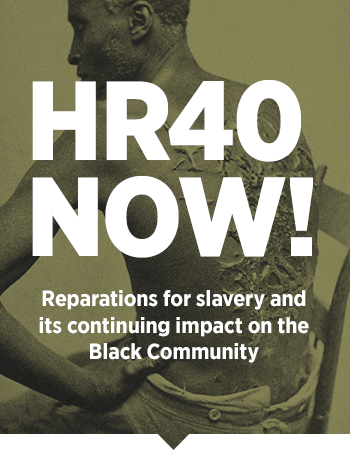
In the aftermath of the CARICOM nations unanimously issuing a declaration demanding reparations from the former colonial nations for Native genocide and African enslavement, in 2015 IBW convened a historic National/International Summit on Reparations in New York City. The summit was attended by representatives from 22 nations from around the Pan African world. It featured an historic interface between the newly established National African American Reparations Commission (NAARC) and representatives from the CARICOM Reparations Commission.
Once again, Rev. Jesse L. Jackson showed up along with our mutual friend and ally Congressman John Conyers. Rev. Jackson delivered a powerful speech in support of reparations at the Reparations Rally at the historic Mother AME Zion Church in Harlem. Rev. Jackson was always there when IBW, under the leadership of Dr. Ron Daniels, needed him!
There were numerous memorable moments that endeared me to this genius of a man. I conclude with one. History records that the young Jesse Jackson was at the side of Rev. Dr. Martin Luther King for the Selma to Montgomery March that occurred after Bloody Sunday. The vicious beatings and blood shed on the Edmond Pettis Bridge, which was witnessed by the nation and the world, was the impetus for the Selma to Montgomery March which produced the nation-changing Voting Rights Act of 1965. Rev. Jackson hailed the Voting Rights Act as one of the most significant achievements of American Democracy. Selma held a special place in his heart, and he would return for the commemoration of Bloody Sunday every year without fail.
“If I didn’t see Rev. Jackson during the year, I could count on seeing him in Selma.”
I too would come to Selma every year because it was an occasion where I could feel and be inspired by our ancestors. If I didn’t see Rev. Jackson during the year, I could count on seeing him in Selma. One year (the exact date eludes me), the great Freedom Fighter and Founder of the Bridge Crossing Jubilee Faya Rose Toure invited Winnie Mandela to Selma as a Distinguished Guest. Sister Winnie was the co-partner in struggle to free South Africa from apartheid alongside the iconic Nelson Mandela.
Normally a person of Winnie Mandela’s stature would march across the bridge on the front row with Rev. Jackson, other civil rights leaders, elected officials and noted guests. But apparently Sister Winnie’s reputation as a firebrand in the struggle for Black majority rule and nationhood in South Africa was problematic for one of the more prominent leaders who also came to Selma every year. The leader in question essentially barred Winnie Mandela from the front row of the March.
Outraged by this outrage, Rev. Jackson, pulled out of the front row, gathered a number of us, formed another line with Winnie Mandela positioned in the center arm and arm with him. The Jackson contingent marched across the bridge to the roaring approval of thousands in the March and thousands lining the March route to and on the bridge. Winnie Mandela, one of the great icons of the struggle for self-determination in South Africa was properly recognized because Rev. Jesse Louis Jackson would accept nothing less! I was delighted to be on the frontline with him!
It was painful watching the physical decline of this historical giant of a man. I first noticed it during one of the annual meetings of the Wall Street Project in New York. When Rev. Jackson spoke, it was without the usual energy and vigor, a soft-spoken talk rather than the usual captivating messaging. I wondered about it and may have even mentioned to him that he should speak with his characteristic energy.
One thing was clear, however, Rev. Jackson’s creative, constantly churning, constantly assessing, analyzing, strategizing, public policy-formulating mind was as sharp as ever. It was just difficult for him to communicate it, especially to those of us who were not with him daily. When I visited him and he directed me to sit by his side for a chat, I needed someone to listen and translate for me. What came out was always cogent and clear in terms of the thoughts he wanted to convey.
In fact, Rev. Jackson kept “pushing,” attending meetings, forums, rallies, demonstrations and inspiring his adoring supporters when he regularly showed up at the weekly, nationally broadcasted and televised Rallies at the legendary headquarters of Rainbow/PUSH, fulfilling his preference to “burn-out” rather than “rust-out,” giving all he had toward bending the moral arc of the universe until he could give no more.
I always remembered that October 8th was his birthday and would call or send a card to mark the occasion. I intentionally increased my visits to Rainbow/PUSH in the past couple of years in hopes of spending more time with Rev. Jackson, but also to assist in whatever ways I could with maintaining, consolidating and expanding the reach of the organization that one of the great visionaries of all time built.
For some reason I had a strong urge (I now know it was providential) to travel to Chicago to be with him on his 84th birthday, October 8th, 2025. I was privileged to participate in the celebration with staff and friends at the headquarters (Reverend was unable to attend) and then visit him in the family apartment. He had just recently been released from the hospital but was basking in the warmth of birthday greetings for a full house of close friends, allies and family members as he lay comfortably inclined in his bed.
When Dr. Jacqueline Jackson aka Little Jackie (as I called her back in the day) asked me to come to his bedside, I had some precious, precious, warm, heartfelt moments of celebration and gratitude with my brother, comrade and friend. He seemed fulfilled and happy. It was difficult to leave him, but I had every intention of returning as soon as my hectic schedule would permit. As I shared this moving experience with my wife and partner she said: “The next time you go, I want to go with you.” And I was definitely planning to take her with me on my next visit. Little did I know that the next time I would see this great beacon of promise and hope was as he lay in repose in the auditorium of the magnificent house he built.
Rev. Jesse L. Jackson joined the ancestors before my wife and partner could see him in the flesh, but she joined me as we traveled to Chicago for the jubilant and glorious private Homegoing Celebration in the House he built, the Rainbow/PUSH Sanctuary! And what a Homegoing Celebration it was. It was like “climbing a stairway to heaven step, by step” with powerful, uplifting, tributes and cultural/spiritual singing by the mass choir, Grammy Nominated and Award winning artists, including the one and only Stevie Wonder, exhilarating spoken word, collectively orchestrated in a manner that captivated the in-house, national and global audiences glued to their virtual devices, convincing us to believe we could fly, higher and higher to keep hope alive in memory of Rev. Jesse L. Jackson!
And we soared to the highest heights! The highlight of one of the greatest Homegoing Celebrations of all time was the personal tributes of the Jackson Family sons and daughters, the children, the “Jackson five.” In his spellbinding and unforgettable Eulogy/Sermon for the ages, Congressman Jonathan Jackson, shared the experience of greeting an elderly woman who was among the more than 20,000 mourners who came to pay their respects at Rainbow/PUSH the week prior to the Homegoing Celebrations. As Jonathan gave her a hug, she whispered something to the effect, “I hope you have your father’s DNA.” Well, it was abundantly clear for all the world to see that the Jackson family children all have the DNA of Rev. Jesse L. Jackson and Jacqueline Jackson, the rock of the family, in their genes! Their collective brilliance radiated throughout the auditorium and reverberated around the nation and the world!
Before introducing his siblings, Yusuf, the new President/CEO of Rainbow/PUSH, declared that he was/is determined to keep this historic organization alive and to elevate it as a formidable force as a legacy of his father. The audience roared its approval, after which he introduced Ashley. She shared memorable moments with her dad, opening a window for the world to see another side of the towering and charismatic persona of Rev. Jesse L. Jackson as a tender, loving father who always made time for his children and family; the multitalented thinker, facilitator, media personality and gifted songstress Santita sent us soaring higher and higher towards the heavens with an unforgettable rendition of To God Be the Glory.
“…millions of beneficiaries… are largely unaware of the ‘stranger’ who made these benefits possible—Rev. Jesse L. Jackson.”
Jesse Jackson, Jr., stepped to the podium with a mission to reveal and amplify attributes of his father that some of us may not have fully understood. Rev. Jackson was not concerned about popularity or personal friendships with the rich, the famous and the powerful, including Presidents of the United States. He never betrayed the moral and political imperative to “speak truth to power.
And, Rev. Jesse L. Jackson was always striving to fulfill the Micah Mandate by visiting jails, prisons and schools, feeding the homeless, standing with poor and working people. But he understood that “true compassion is more that flinging a coin at a beggar.” Rev. Jackson fought for public policies to provide safety net benefits that are taken for granted by millions of Americans who may have never known Rev. Jackson. Citing a real-life experience by the great theologian Howard Thurman, Jesse, Jr. noted that millions of beneficiaries of these benefits are largely unaware of the “stranger” who worked to make these benefits possible, Rev. Jesse L. Jackson.
Dr. Jacqueline Jackson, “Little Jackie,” calmly took the mic and urged the audience to be patient because she intended to take her time to fully tell the story of her relationship with her father. As the designated primary caregiver for her father, she was understandably emotional as she reflected on and shared how more deeply their relationship had grown as his physical abilities declined. It was amazing how their minds, their psyches were in sync. You could hear a pin drop in the audience as she recounted how the great Rev. Jesse Louis Jackson spent hours upon hours of precious moments affirming her capabilities and encouraging her to believe in herself; indispensable, precious moments that bore fruit in making her the confident woman she is today. It was absolutely riveting. When Dr. Jackqueline Jackson finished, the audience jumped to their feet for a sustained standing ovation!
“Rise Jesse Rise… an affirmation that the legacy of this authentic genius will live on.”
I referenced Congressman Jonathan Jackson’s “Eulogy/Sermon for the ages” earlier in this tribute and testimonial because there was virtually a universal sentiment among those present and those viewing his spiritually inspired oration that we could just say a collective AMEN and depart fulfilled. It was just that powerful and memorable.
Typically, there is a theme or phase, something special about a remarkable presentation that makes it memorable. In this instance it was Congressman Jonathan Jackson rhythmically chanting the exhortation Rise Jesse Rise, Rise Jesse Rise, Rise Jesse Rise mixed with an affirmation of the belief that the family, those present and viewing around the nation and the world will keep the legacy of this authentic genius alive, not only by remembering and saying his name but by our determination to “keep on pushing” in the words of the iconic Curtis Mayfield!
Rise Jesse Rise. I am so happy that my wife and partner Mary France Daniels journeyed with me to witness one of the greatest Homegoing Celebration of all time. For me it was fulfilling and mission-driven, reaffirming the commitment I made in my note of condolence to Mrs. Jacqueline Jackson and the family that “as long as I am on this side (alive and on earth), I am committed to Keep Hope Alive!”
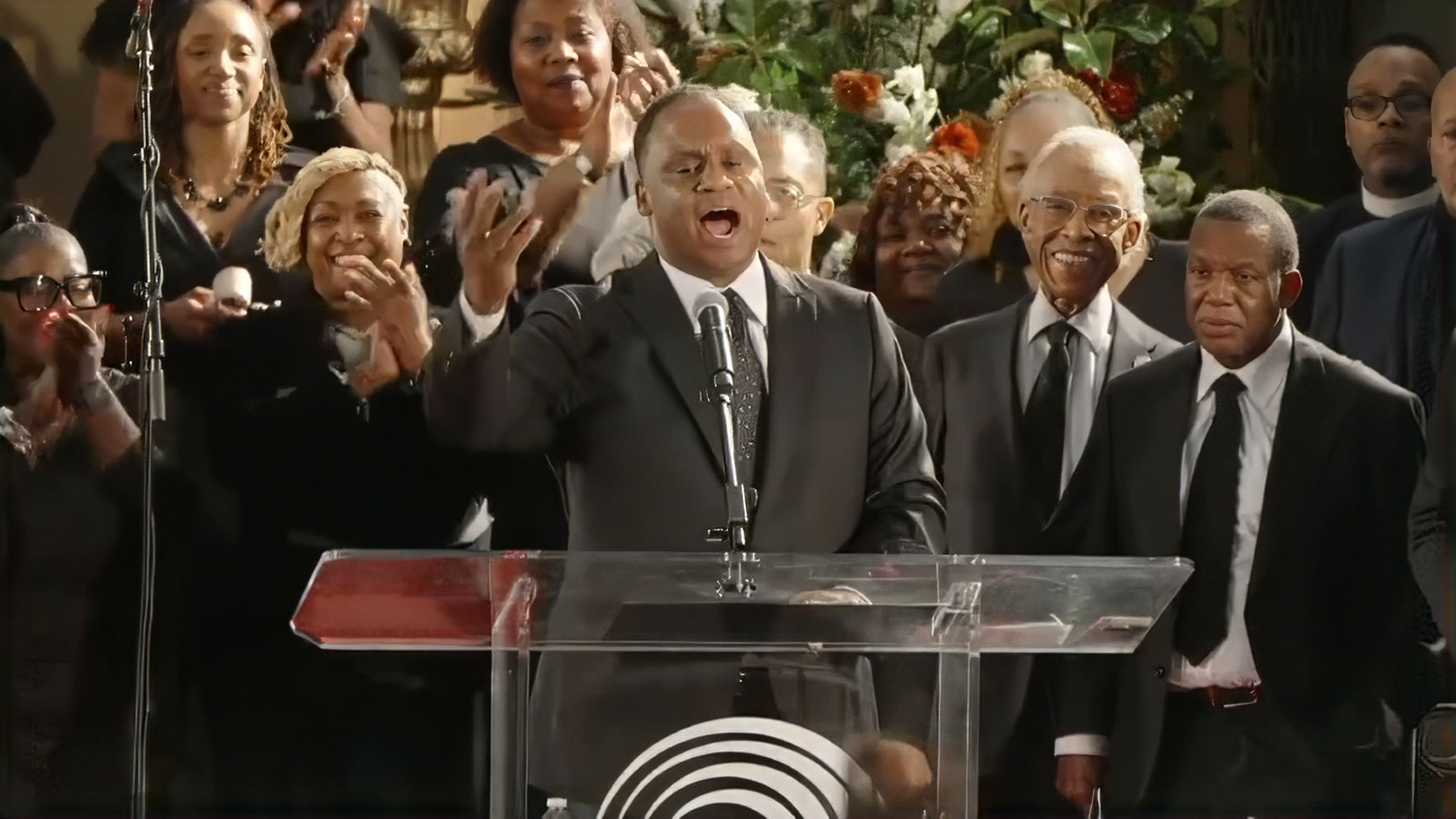
Congressman Jonathan Jackson speaks at the March 7, 2026 homegoing service, where the refrain “Rise, Jesse, Rise” emerged. (Screenshot via YouTube)
The prophecy embedded in the exhortation Rise, Jesse Rise is reminiscent of the words of the Honorable Marcus Mosiah Garvey as he sailed back to Jamaica having been unjustly expelled from this country: “Look for me in a whirlwind or a storm! Look for me all around you! For with God’s grace, I shall come back with countless millions of Black men and women who have died in America, those who have died in the West Indies, and those who have died in Africa, to aid you in the fight for liberty, freedom and life!”
And so, as I conclude this Tribute and Testimonial, I say to my ascendant brother, friend and comrade in the struggle, Reverend Jesse Louis Jackson, an authentic genius, “Well done thy good and faithful servant.” Rest in peace and power assured that wherever the sons and daughters of Africa everywhere pour libations, it will include Rise, Jesse Rise as we collectively strive to “bend the moral arc of the universe towards justice” in your memory and name.
Fourteen days after one of the greatest Homegoing Celebrations of all time, from the bosom of my soul, this Tribute and Testimonial is finally finished!
I don’t usually keep name tags from events no matter how important. However, upon my arrival at the Rainbow/PUSH Headquarters, I was honored to be presented with a Staff Badge with the official image of Rev. Jackson. This Badge is special. So, I do not plan to dispense with it. Instead, I have attached it to a curtain rod above my desk in the office so that I can see my beloved brother every day looking down on me to ensure that I keep my promise to Keep Hope Alive!
A Luta Continua,
Yours in the victorious struggle,
Dr. Ron Daniels
March 21, 2026
Selected moments with Rev. Jesse L. Jackson
Images of Rev. Jesse L. Jackson’s historic arrival at the Youngstown Municipal Airport to announce Ron Daniels’ appointment as Executive Director of the National Rainbow Coalition. He was greeted by the Mayors of Youngstown and Struthers, Ohio and the who’s who of Black faith, elected and civic leadership of Youngstown. The whirlwind day included a home cooked meal at the Daniels’ family residence with key allies and supporters, including Rev, Jackson’s longtime friend Rev. Lonnie A. Simon, rallies at two labor union halls, culminating with a celebratory testimonial event honoring Ron Daniels where Rev. Jackson was the Keynote Speaker.
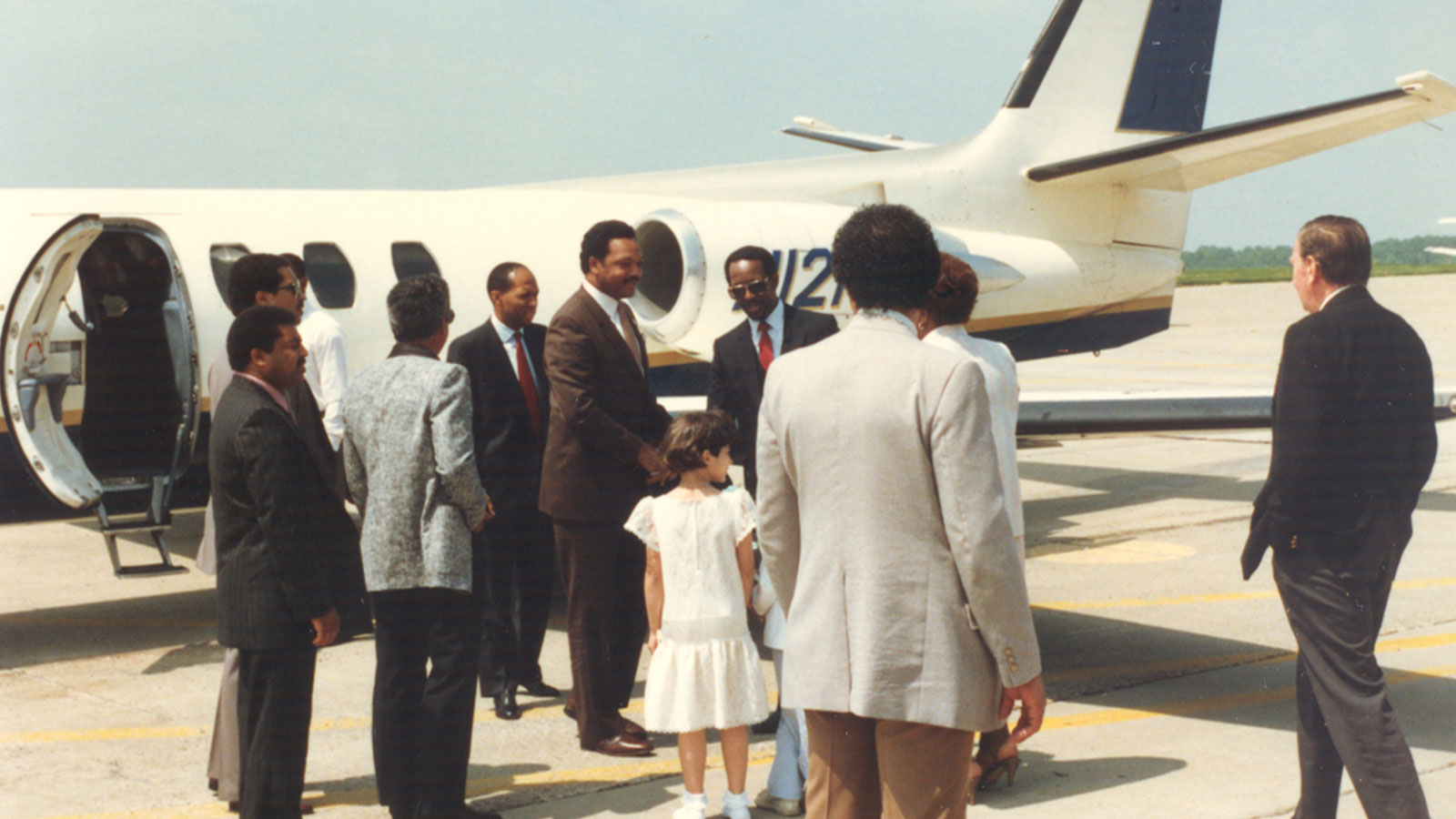
Children of members of the reception party prepare to greet Rev. Jesse L. Jackson upon his arrival at the Youngstown Municipal Airport. Courtesy of Dr. Ron Daniels
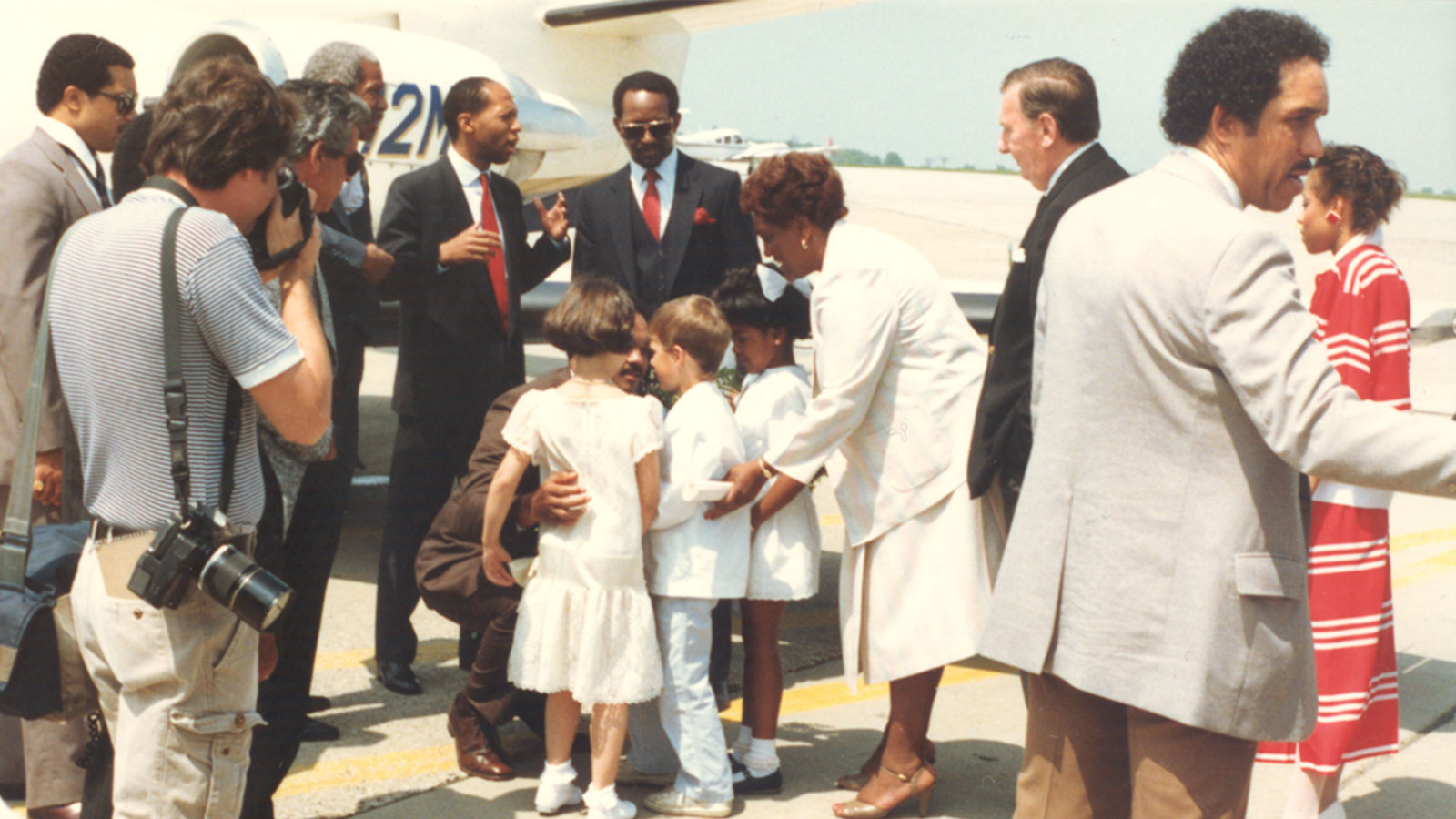
Children greet Rev. Jesse L. Jackson during his arrival at the Youngstown Municipal Airport. Courtesy of Dr. Ron Daniels
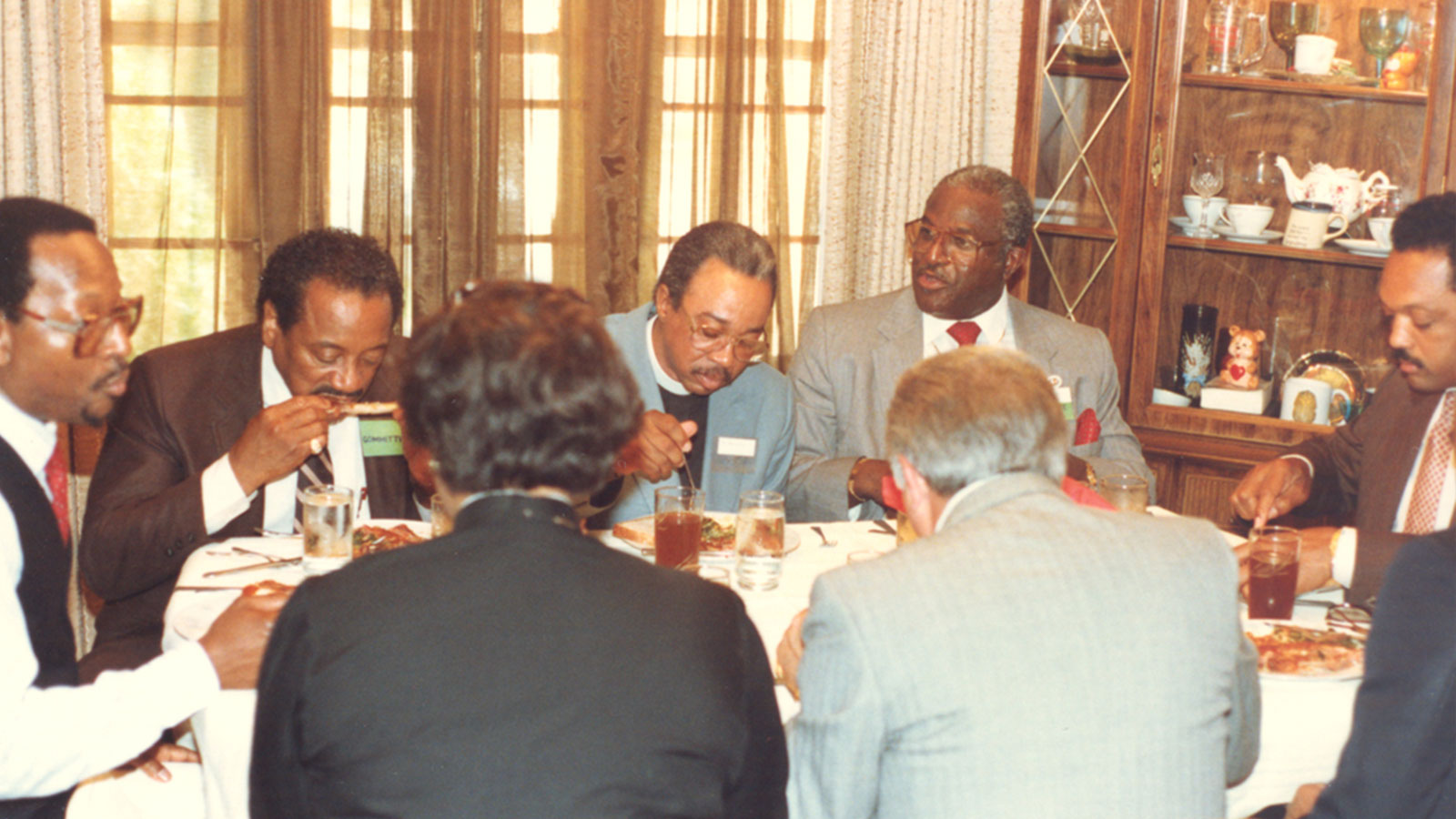
A soulful dinner with Rev. Jesse L. Jackson at the Daniels’ family home with key allies and supporters. Courtesy of Dr. Ron Daniels
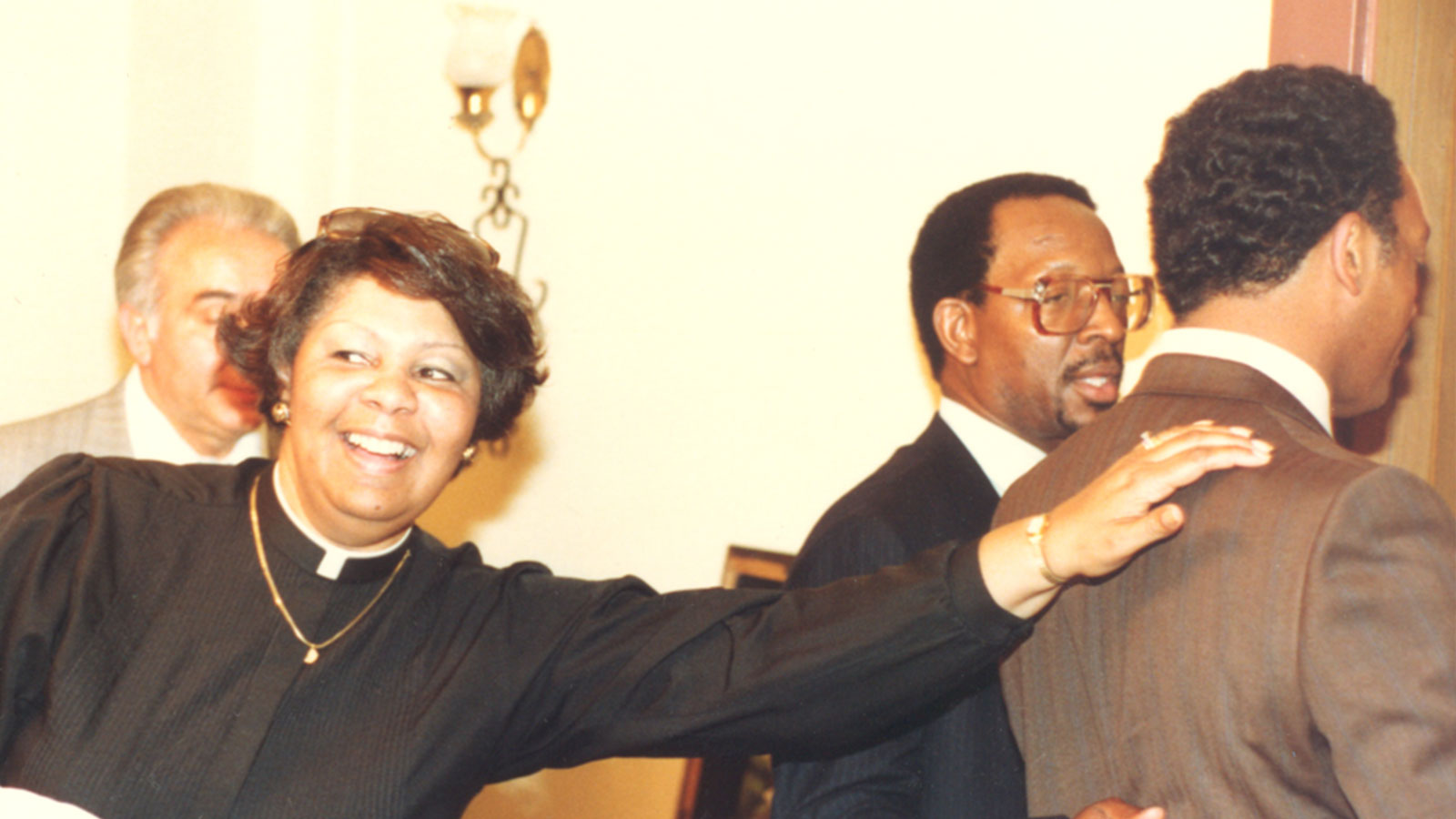
Rev. Gina Thornton, Spiritual Advisor to Ron Daniels, reaches to touch the “hem” of Rev. Jesse L. Jackson’s garment. Courtesy of Dr. Ron Daniels
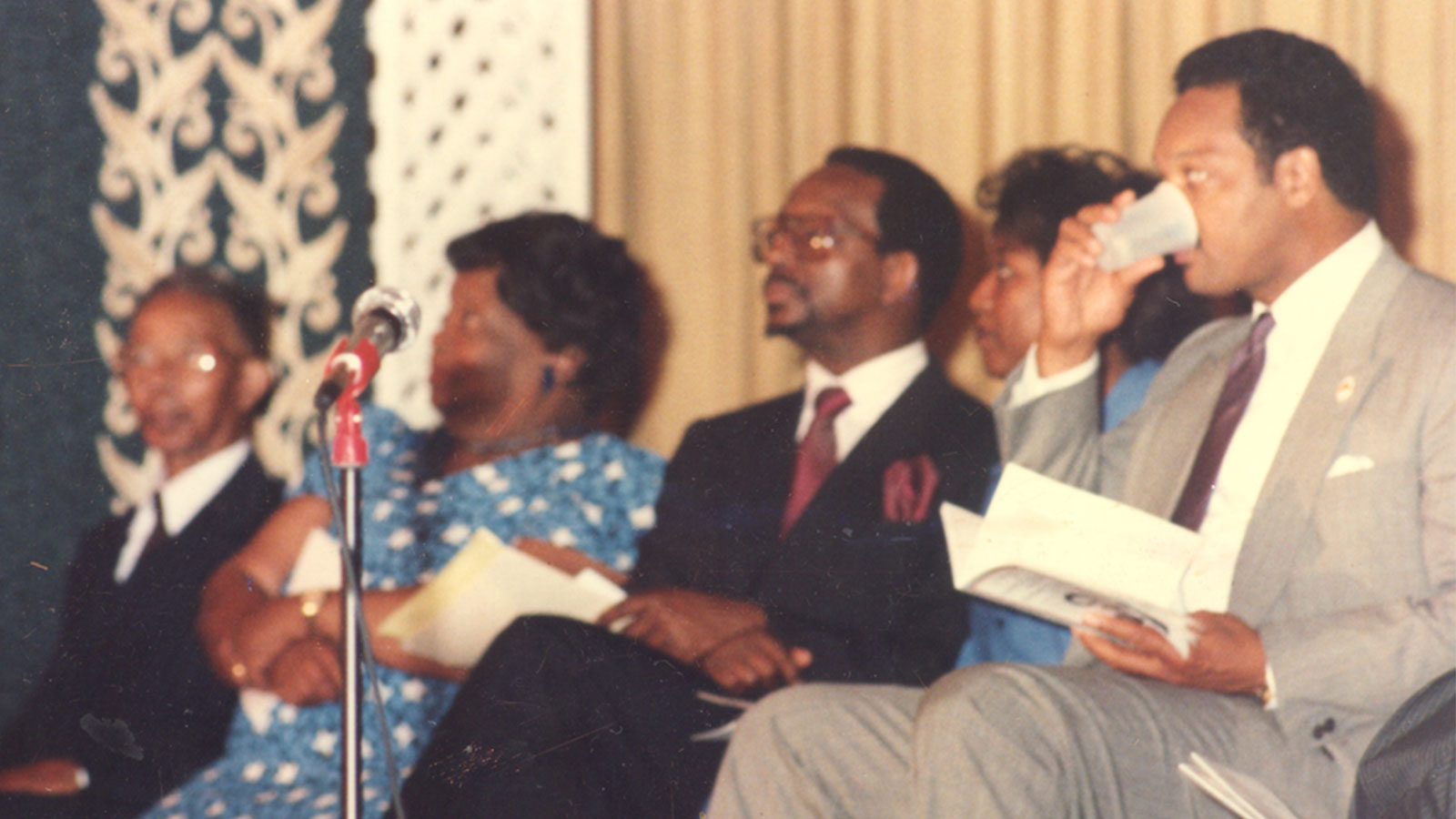
Rev. Jesse L. Jackson seated with Ron Daniels’ father, mother, and wife as he prepares to speak at the testimonial celebration. Courtesy of Dr. Ron Daniels