Nikole Hannah-Jones’s New York Times essay, “In Fighting for Every Black Child, Did I Betray My Own?” resonated for me as it did for many Black middle-class parents raising their sons and daughters in New York City. I do not see Nikole Hannah-Jones as betraying her daughter. Rather, she acknowledged the impact of her decisions on her daughter and many parents who face this dilemma and gave us a reality check on the challenges faced by parents and on the inequities in a segregated school system.
My husband and I wondered if we had made the right decision by not keeping our sons enrolled in a private predominantly Black school throughout their educational journey. As educators who had been products of the New York City school system and who had worked in New York City schools, we wanted to ensure that our sons would have a culturally enriched and nurturing educational experience and that they would be exposed to teachers and students who looked like them. We strongly believed that public schooling could work if parents, teachers, and educational leaders collaborated and put structures in place that provided a holistic education which valued and developed students’ self-esteem, knowledge of history and culture, and civic responsibility.
I began my professional career as an educator over five decades ago. Because I wanted to support the literacy of Black and Brown children in our New York City School system, I decided to major in English Education. I was aware of the inequities in education faced by Black and Brown children who were in predominantly Black schools. In the Junior High School that I attended in the Flatbush section of Brooklyn, I had been placed in accelerated classes because of my high reading scores. As the only Black student in that class, I felt isolated. The majority of the Black students in the school were bussed in from Brownsville and Bedford Stuyvesant, and they were placed in the lower track classes in grades seven, eight, and nine. The isolation I felt continued when I entered Erasmus Hall HS and was once again one of two Black students in most of my classes. The exception was gym.
My choice to major in English Education was motivated by my goal to become a teacher in a junior high or high school (JHS) and to be a role model for students like me and for the many who had never had a Black teacher. I had witnessed what happens when students do not feel valued and respected and are not pushed to excel. I wanted to be recognized as a strongly committed passionate teacher.
My vision began to be realized when I began my student teaching in an alternative high school for students who had trouble adjusting to regular high schools. Park East High School provided me with an opportunity to design and teach a course which I called Black Creation, to develop a college prep course, and to tutor a student whose reading level was several years behind.
Excited by the changes that I could affect in public school, I began teaching in a JHS upon graduating from college. That was when I realized that there was a crisis in our educational system. All of the students in my sixth-grade class were reading at the third or fourth grade level, and I was told by the administration that my teaching should focus on test-taking and preparing them to pass the reading test. This went against my core values about what motivates students to enjoy reading and to become competent readers and writers. Students need to read real books and to engage with real texts. They needed substantive writing experiences.
Teaching to the test was not an option for me. I understood that this school system was not designed to provide our youth with meaningful learning experiences and thought maybe it would be better if I started at the beginning and taught elementary school. Upon conveying this to my principal, he offered me an opportunity to teach at an elementary school in Bedford Stuyvesant. To my chagrin, the third and fourth grade students I encountered were reading at the first-grade level. The realization that the system was dysfunctional really struck me. A student-centered learning classroom was nonexistent. Fulfilling administrative tasks and classroom management were more important than ensuring that students were reading and writing real texts or actively engaged in acquiring knowledge in a culturally and educationally enriched classroom community. The public school system was in real trouble.
After witnessing this, I determined that I would obtain a Master’s degree in the teaching of reading at the elementary school level. I now had a choice, stay and try to change the system from within or start my own school. Ultimately, I resigned from teaching for the NYC Board of Education.
Fast forward, my husband and I had two sons, and we had to decide where they would attend school. As educators, we knew about the importance of a student-centered environment and culturally responsive pedagogy. We strongly believed that it was important that they have a sense of pride regarding their culture and heritage. Our sons’s names, Talib Kweli and Jamal Kwame, speak to the value we placed on instilling them with a knowledge of their African heritage. Both of us had been subjected to isolation and alienation in the schools we had attended, and we did not want that for our sons. We enrolled them in an independent Black school, Weusi Shule, and then in Junior Academy, a private Christian school. However, we eventually realized that if we spent all of our funds on private school, it would deplete what we would have when it was time for our sons to attend college.
We then decided to enroll them in a suburban elementary school in the district in which my husband was teaching. That lasted for two years, and a turning point came when they came home and stated that they wanted to change their names to Peter and Jason. We could begin to see the signs that they too felt alienated, as we had in attending predominantly White schools and their first instinct was to change their names. This went against all that we were trying to instill in them, and we informed them that their names had a meaning and that if they still wanted to change their names when they reached 18, they could.
At this point, we realized the contradictions in our approach to schooling. We had started them in predominantly Black schools because we wanted to ensure that they had a strong sense of self and that they were nurtured and felt valued. I had taught in the public school system, and I knew the inherent problems. We could find another private school or predominantly White school, or we could enroll them in their neighborhood school and work with teachers and leadership within the schools to effect change. We chose the latter and as Nikole Hannah-Jones cites in her essay, “In Fighting for Every Black Child, Did I Betray My Own?”, we encountered the problems that result from underfunded schools, little parental involvement, limited resources, and environments that do not actively seek extracurricular programs and activities for their students. The school wanted to skip my younger son and we advised them not to because we believed that he needed to be able to socialize with peers in his age range. As a result, he became a monitor for the class and was given additional assignments that took him out of the classroom. In short, they did not know how to keep him motivated and engaged. My older son was placed on the highest track in grade five. He was social, got along with everyone, and was among the highest achievers in the class. The school wanted to enroll him in a Prep for Prep program, but he did not want to be singled out by going to Saturday school and attending school in the summer. Thus, we had tried the public school system, but they were not prepared for our children.
Jamal was accepted into Hunter High School after I made sure that he took the test. The public school that he was in had no information on the admissions test and if I had not actively pursued his testing for Hunter College High School, he would not have known that he was eligible to take the exam. Talib went to the gifted program at Summit JHS, but the school was part of a larger campus and he eventually became involved with students who were not as motivated and conscious about their performance. We eventually removed him from that predominantly Black school and enrolled him in a JHS in our integrated neighborhood. Talib performed well and enrolled in Brooklyn Technical HS, but once again, he decided to socialize and interact with students who were not going to class. We made a decision that he would have to graduate from high school, so we used our funds and sent him to a boarding school in Connecticut. He did well and eventually told us he was thankful.
I began teaching at Medgar Evers College of the City University of New York in 1980, and the experiences that had daunted me when teaching high school, middle school, and elementary school were once again evident. My students had entered college and many of them were reading on a sixth-grade level or even lower. I asked myself how could I address this lingering problem in our educational system and decided to pursue my PhD in Composition and Rhetoric. My research and study of composition theory and pedagogy helped to improve the literacy of my students, and I continued to use the research and apply the techniques that I had learned over my five decades of teaching. I also created a program called Re-Envisioning Our Lives through Literature (ROLL) at the Center for Black Literature. The goal of the program is to improve students’ critical reading, writing, and communication skills by reading, studying, and writing about themes in literary texts, building and expanding their knowledge base about literature from diverse cultures. Students draw upon their personal experiences to create literary dramatic skits, essays, letters, and poems, contribute to a literary anthology, and participate in a performance at the end of the program.
Nikole Hannah-Jones’ essay is a Call to Action. New York City has a large diverse population, but the school system is segregated and segregated schools with students from low-income backgrounds are replete with inequities with respect to funding, resources, extracurricular activities, and teacher shortages. Jones and her husband did not give up on New York City schools. They have persisted and remained in the struggle to ensure that their daughter and others receive a sound education based on the principles of culturally responsive education. In writing this essay, Hannah-Jones sheds light on the complexities of working within a segregated school system in 2026.
There are various models in place that put students first: the Abolitionist Teaching model advocated by Dr. Bettina Love, the NY Freedom Schools proposed by President of the New York State NAACP Conference of Branches L. Joy Williams, and a variety of arts, science, and social justice programs that supplement our schools. Education for our youth must take place in multiple spaces. In my view, Hannah-Jones has not betrayed her child’s educational journey; she has put a check on our public school system.
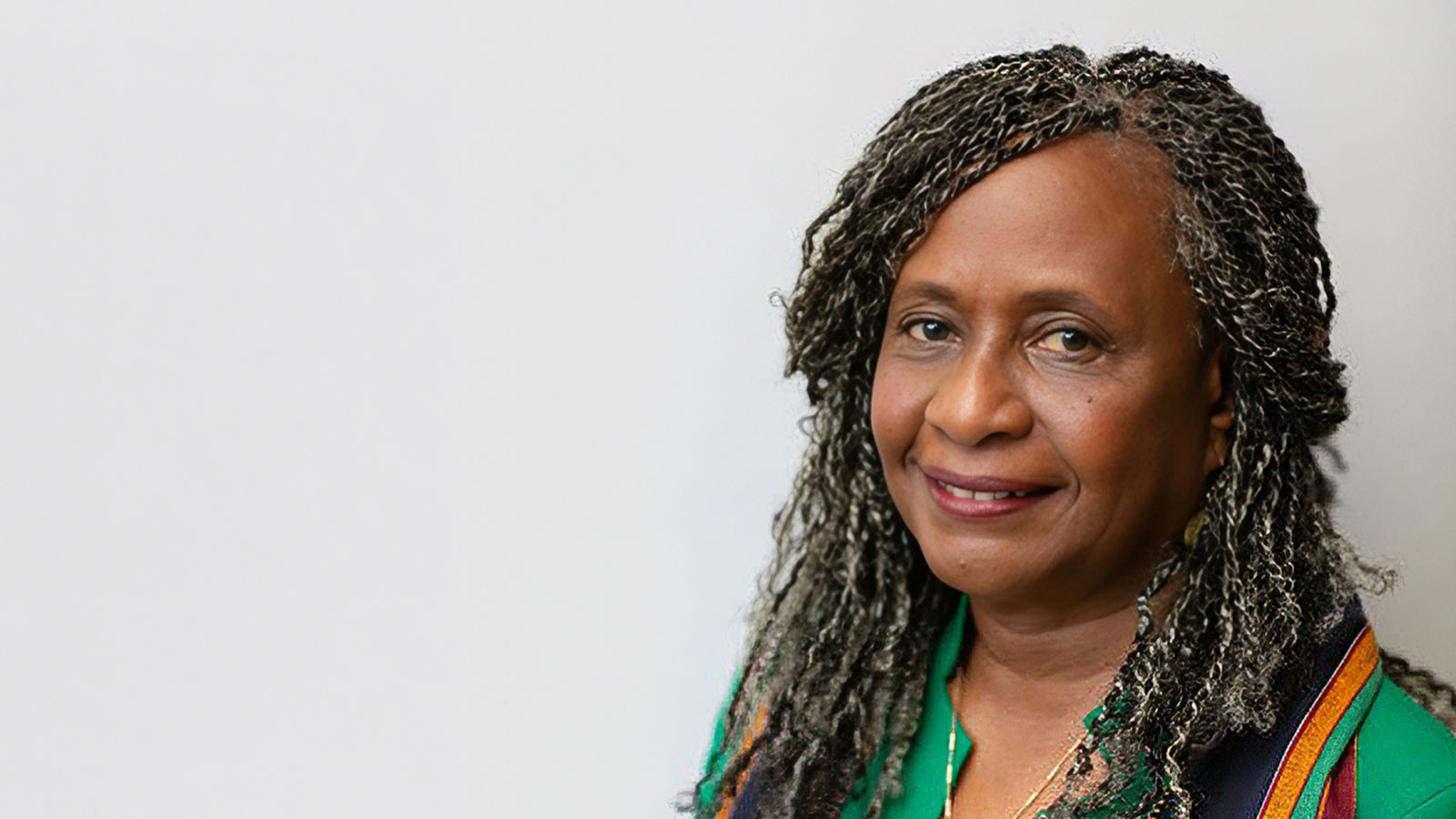
Dr. Brenda M. Greene is an Author, Professor Emerita, and Founder and Executive Director Emerita of the Center for Black Literature at Medgar Evers College, CUNY. For more information, visit https://www.drbrendamgreene.com